Article
July 10, 2026
From restoration to resilience: What life after delisting means for Muskegon Lake and other Great Lakes areas of concern
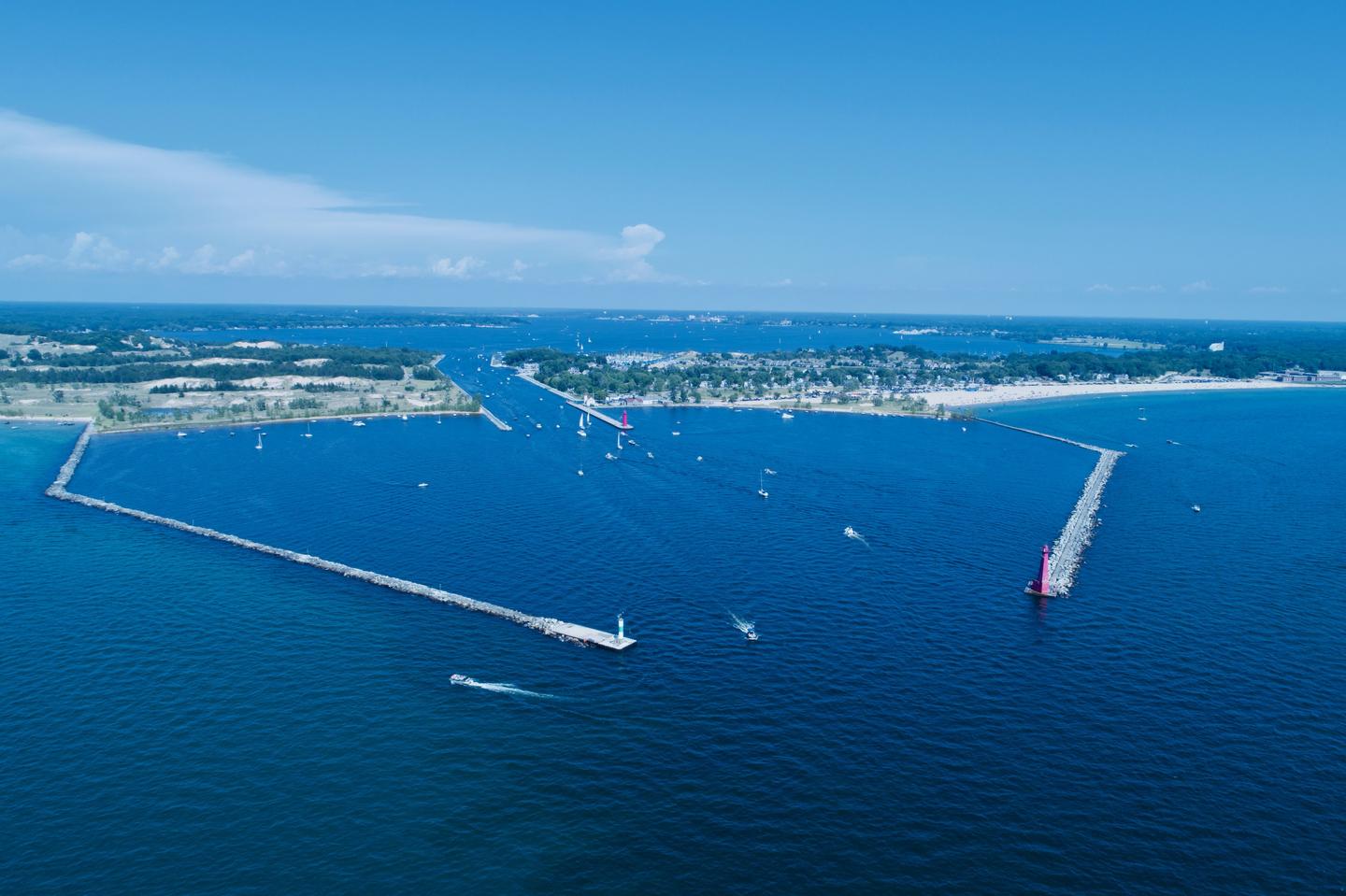
As Muskegon Lake prepares to celebrate its delisting as a Great Lakes Area of Concern, the restoration effort offers a timely look at what it takes to move from environmental recovery to long-term resilience.

Contact our expert
Dustin L Tazelaar
Project Manager, Environmental Toxicology
A milestone worth celebrating
On August 15, 2026, partners from across West Michigan will gather to celebrate the delisting of the Muskegon Lake Area of Concern (AOC), a milestone that reflects decades of scientific investigation, remediation, habitat restoration, stewardship, and community commitment. Delisting represents far more than removal of a designation. It is evidence that coordinated environmental action can create meaningful and lasting change.
Restoring habitat at a complex industrial legacy site
Among the many projects contributing to this broader restoration effort was the Amoco Fish and Wildlife Habitat Restoration Project, located along the southern shoreline of Muskegon Lake. While no single project can claim responsibility for the lake’s delisting, projects such as this demonstrate how innovative engineering, stakeholder engagement, and long-term stewardship can contribute to measurable ecological recovery.
The project site, owned by project partner the City of Muskegon, consisted of a 23-acre former petroleum storage and transfer facility situated along the Muskegon Lake shoreline. Historic industrial use had significantly altered the landscape. Former wetlands and shallow-water habitats had been filled over time, and a 2,300-foot-long concrete wall separated remaining wetland areas from the lake.
Restoration planning required balancing multiple objectives. The project needed to improve fish and wildlife habitat, reconnect fragmented wetlands, maintain recreational access, address residual environmental concerns, and function under highly variable Great Lakes water-level conditions.
Ramboll supported the project through site characterization, environmental investigations, stakeholder coordination, engineering design, permitting, construction oversight, monitoring, and reporting. This full-project lifecycle approach helped align restoration objectives with long-term community and environmental needs.
The project ultimately contributed restored and enhanced wetland habitat, open-water habitat improvements, shoreline softening, and recreational benefits that aligned with broader AOC restoration targets.
A road map to success: Applying lessons from Muskegon Lake to the rest of the Great Lakes AOCs
Decades of collaboration helped transform Muskegon Lake from one of the Great Lakes’ most impaired waterways into a restoration success story. The success at this site demonstrates what is possible when communities remain committed to a shared vision and provides a roadmap for other Areas of Concern working toward similar goals.
Below we highlight the key takeaways from the Amoco project and the Muskegon Lake delisting in general.
1. Engineering with nature in practice
One of the keys to success for the Amoco project was working with Engineering With Nature principles and integrating habitat creation and coastal resilience into a single solution.
Ramboll designed nearshore segmented shoals to provide wave attenuation while simultaneously creating fish foraging, refuge, and spawning habitat. We also incorporated native vegetation and shoreline stabilization features to create a soft shoreline edge capable of adapting to changing water levels. By removing the concrete wall, hydrologic connectivity between isolated wetlands and Muskegon Lake was restored, allowing ecological processes to function more naturally with a resilient coastal wetland complex. The resulting design demonstrated that ecological restoration and infrastructure objectives do not need to compete. Instead, nature-based solutions can be leveraged to improve resilience, habitat quality, and long-term performance simultaneously.
2. Community engagement drives success
Muskegon Lake’s success story belongs to many organizations and individuals. Federal, state, regional, municipal, academic, nonprofit, tribal, community, and private-sector partners all played critical roles in advancing the restoration goals that ultimately supported delisting.
One of the most important lessons from Muskegon Lake is the value of early and frequent stakeholder engagement. This project emerged from years of planning and collaboration among the Muskegon Lake Watershed Partnership, West Michigan Shoreline Regional Development Commission, NOAA, Great Lakes Commission, state and federal agencies, universities, and community stakeholders.
These partnerships helped identify restoration priorities, secure funding, build consensus, and maintain project momentum. Just as importantly, engagement continued after construction. Volunteer stewardship programs, invasive species management efforts, and ongoing community participation have helped protect restoration investments and sustain ecological outcomes.
3. Monitoring tells the rest of the story
Construction may have been completed in 2021, but the work did not stop there. Over the last five years, monitoring documented vegetation establishment, habitat performance, invasive species management needs, and overall ecosystem development.
The results demonstrated that restoration goals were largely achieved and that the site supported a healthy and diverse coastal wetland. Wildlife observations showcased use of the site by numerous bird species, turtles, pollinators, and other wildlife. Monitoring also supported adaptive management by helping project partners identify maintenance needs, coordinate invasive species control, and preserve the site’s ecological function over time.
In September 2025, the US Army Corps of Engineers reviewed the Year-5 monitoring results and determined that mitigation efforts had progressed satisfactorily, concluding regulatory monitoring requirements.
The work continues
As Muskegon Lake enters its post-delisting chapter, the focus now shifts from achieving restoration targets to sustaining them. Delisting does not eliminate future environmental challenges. Invasive species management, waterfront redevelopment, climate adaptation, coastal resilience, habitat stewardship, and long-term monitoring remain important priorities.
Muskegon Lake’s delisting marks a powerful restoration milestone, but its greatest legacy may be the model it offers for what comes next: sustained stewardship, resilient natural systems, and communities working together to protect the gains they have achieved. For other Great Lakes Areas of Concern, it is a reminder that restoration is not simply an endpoint, but a foundation for a healthier, more resilient future.
LEARN MORE
Building resilience across the Great Lakes
For decades, Ramboll has partnered across the Great Lakes to solve some of the region's most complex environmental challenges. By integrating expertise in remediation, sediment management, biodiversity, climate adaptation, water systems, resilient infrastructure, and ports and maritime development, Ramboll helps governments, industry, and communities protect critical freshwater resources while enabling sustainable economic growth.