What it really means to look out for each other
During National Safety Month, Jeff Parsons, Head of Health, Safety & Environment (HSE), Americas, shares his perspective on Ramboll's safety culture and commitment to zero harm.
"A strong safety culture is driven by caring, committed leaders and employees who work safely even when nobody's looking.”

Head of HSE, Americas
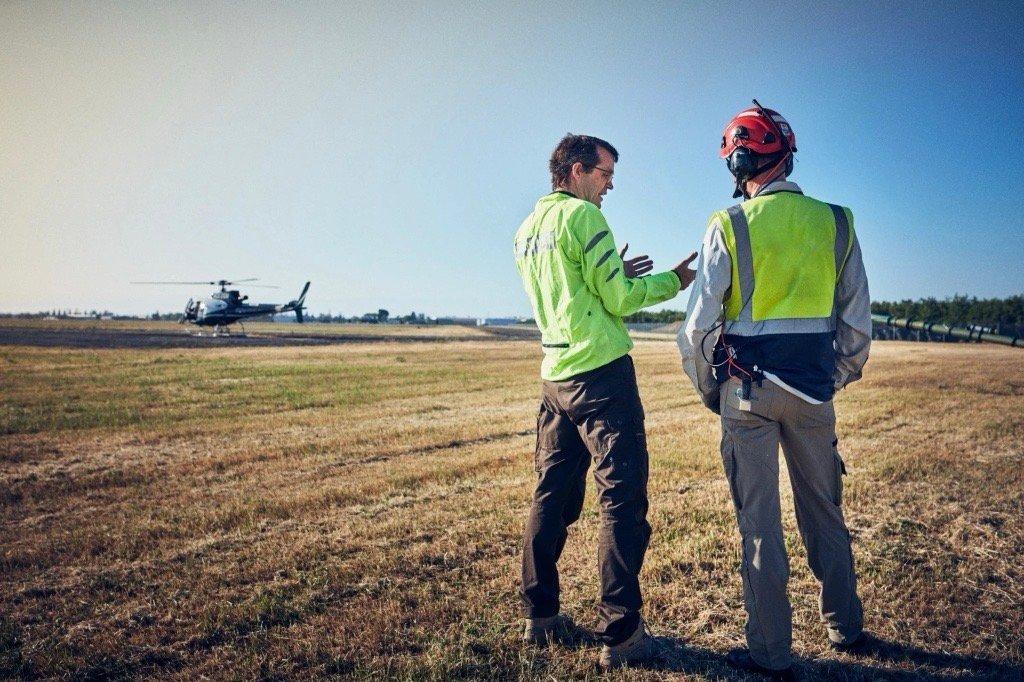
Safety takes on a different meaning in every industry. For Ramboll, it can look like wearing the right PPE on a remediation site or considering office-specific safety plans across our offices in the Americas. Since our founding, a responsibility towards our employees has been embedded in everything we do. No project, client, or schedule comes before the health, safety, and wellbeing of our people.
Regardless of the wide range of safety regulations, what doesn't change is the reason behind it all: that every one of us makes it home safe.
As we head into National Safety Month, we sat down with Jeff Parsons, Head of HSE, Americas, to talk about what zero harm really means, and why it's everyone's responsibility to uphold it.
Scaling safety without losing the principle
Ramboll operates across a wide range of environments. From desk-based consultants to teams supporting active construction and environmental projects, the hazards our people face vary.
For Jeff, that complexity is one of the defining challenges of the role. "One of the ongoing challenges is developing a safety program that appropriately scales planning, controls, and oversight to match the complexity and risk profile of the work being performed," he shared.
Yet while the approach scales, the standard doesn't. No matter how thorough the procedures, Jeff sees zero harm as the baseline question every decision should come back to. "Procedures and compliance requirements are important," he noted, "but they are not substitutes for thoughtful decision-making, personal accountability, and genuine care for one another."
What safety culture actually looks like
Ask Jeff what a strong safety culture looks like, and he'll tell you it has less to do with rules and more to do with people.
Regardless of role and hierarchy, we’re all expected to work safely with and for others. While the specific requirements might look very different between an office environment and a field project, the underlying expectation – that we all watch out for one another – stays constant.
Safety and sustainability: more connected than you'd think
Jeff sees safety and sustainability as deeply intertwined: "Safety is the original sustainability goal," he explained, "because protecting people has always been the foundation of responsible and sustainable operations." Long before ESG became a part of the conversation, organizations innately knew that preventing harm, protecting health, and building safe environments were not only critical, but essential to long-term success.
Because a workforce that feels safe is also one that's more engaged, more reliable, and more resilient, which Jeff argues, is sustainability in its most tangible form.
What keeps it personal
But, there is, of course, a quieter side to all this, one that doesn't always make it into the conversation: the near-misses that were caught.
The incidents that didn't happen. The cumulative effort of professionals and colleagues making good decisions every single day.
Jeff noted, "It can be easy to not appreciate the incidents that never happen because of the dedication and collective efforts of our HSE professionals, leaders, and employees." But when something does go wrong, that's when the weight of it all changes how you see the work.
"For me, it is not one specific event, but every instance in which a colleague is seriously hurt on my watch that drives the question: what more can we do to achieve zero harm?"
A message for every employee
As Safety Month gets underway, Jeff's overarching message is one of empowerment.
"At Ramboll, you are empowered. You are empowered to ask questions regarding anything that may affect your health and safety. You are empowered to request and obtain any equipment needed to perform your work safely. And most importantly, you are empowered to exercise your stop work authority when you feel risks are not properly addressed," he shared.
Zero harm isn't just a leadership commitment. It's something all of us carry and owe each other.
Want to know more?
Jeff Parsons
Head of Health, Safety & Environment, Americas