Resilient societies and liveability
Adam Tindall-Schlicht, Amnon Bar-Ilan, PhD
January 14, 2026
Ports at a crossroads: How climate resilience delivers the maritime economy we need
Federal programs are reshaping American ports. The question now is whether we can continue to align climate adaptation with economic ambition to unlock transformative maritime growth in the decade ahead.
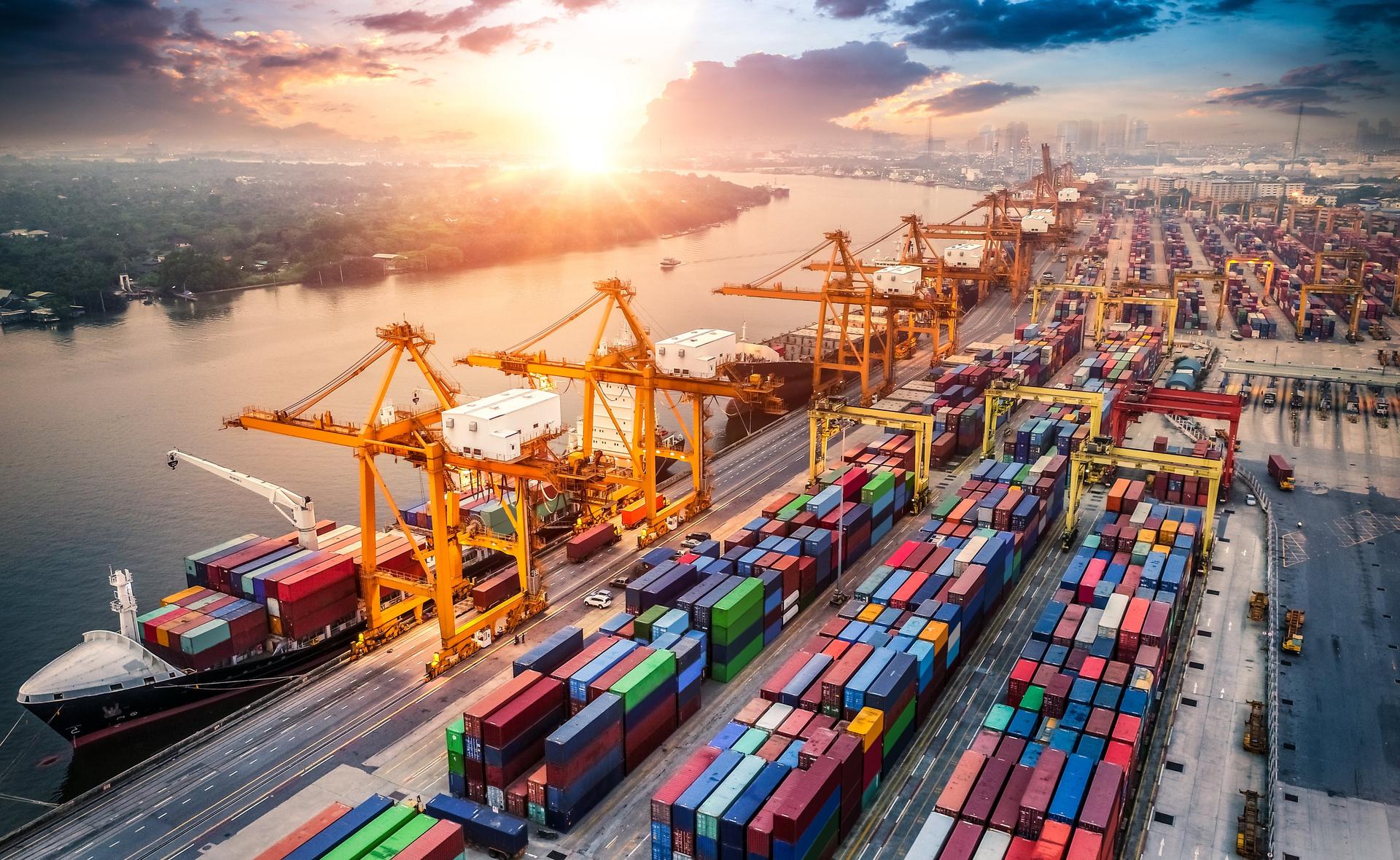
For generations, US ports have been engines of economic activity, industry clustering, and national identity. Today, they sit at a pivotal crossroads. Rising climate pressures, aging infrastructure, supply chain volatility, domestic manufacturing goals, and historic public funding all converge at the waterfront. The central question for port leaders, funding agencies, and engineering partners is increasingly clear: in the current geopolitical climate, can resilience become the catalyst, not the cost, for growth, shipbuilding, and maritime competitiveness?
The opportunity in front of us
Thanks to two unprecedented federal programs, USEPA’s Clean Ports Program and the USDOT Ports Infrastructure Development Program (PIDP), the US has put forward its most ambitious port investment agenda in recent memory. As announced in 2024, USEPA Clean Ports will invest more than $3 billion in emissions reduction, electrification, and climate resilience projects at 54 active sites. The PIDP has been modernizing US ports since 2019, by advancing infrastructure, operational efficiency, and supply chain optimization projects across the country.
These programs are essential as both US economic and environmental strategy tools, such as climate resiliency, sustainability, and emissions reduction, providing a meaningful pathway for delivering on current federal maritime priorities, including:
- Stronger domestic shipbuilding: Climate-resilient and low-emissions port upgrades will create sustained demand for US-built vessels, support craft, and maritime equipment.
- Accelerated export capacity: Modernized, sustainable terminals will improve reliability and reduce climate-driven disruptions, strengthening US exporters’ competitiveness.
- Advanced manufacturing growth: Resilient, low-carbon ports will attract manufacturers seeking stable logistics, renewable energy access, and efficient supply chains.
- Energy transition infrastructure: Climate-ready ports will provide the foundational grid, storage, and safety systems needed to deploy hydrogen, ammonia, and other emerging fuels.
- Workforce stability and job creation: Long-term resilience and electrification investments will generate predictable construction, operations, and technical jobs while improving longshore worker health and retention.
Implementation will determine outcome
While federal funding is necessary, it is insufficient by itself. The real work will depend on how well port authorities align with private and public sector headwinds locally and globally, including:
- Regional climate planning: Aligning port projects with regional climate models will ensure infrastructure is designed for future conditions rather than past norms.
- Municipal permitting: Streamlined local permitting will enable ports to deliver federally funded resilience and electrification projects on schedule and at scale.
- State policy priorities: State-level transportation, energy, and economic policies will determine whether federally supported port projects translate into broader industrial growth.
- Private-sector innovation and investment: Industry-driven technologies, including zero-emission equipment, advanced fuels, and digitalization, will convert climate mandates into operational and economic advantage.
- Community and environmental justice concerns: Meaningful engagement with neighboring communities will build the social license required for ports to expand, modernize, and operate cleaner infrastructure.
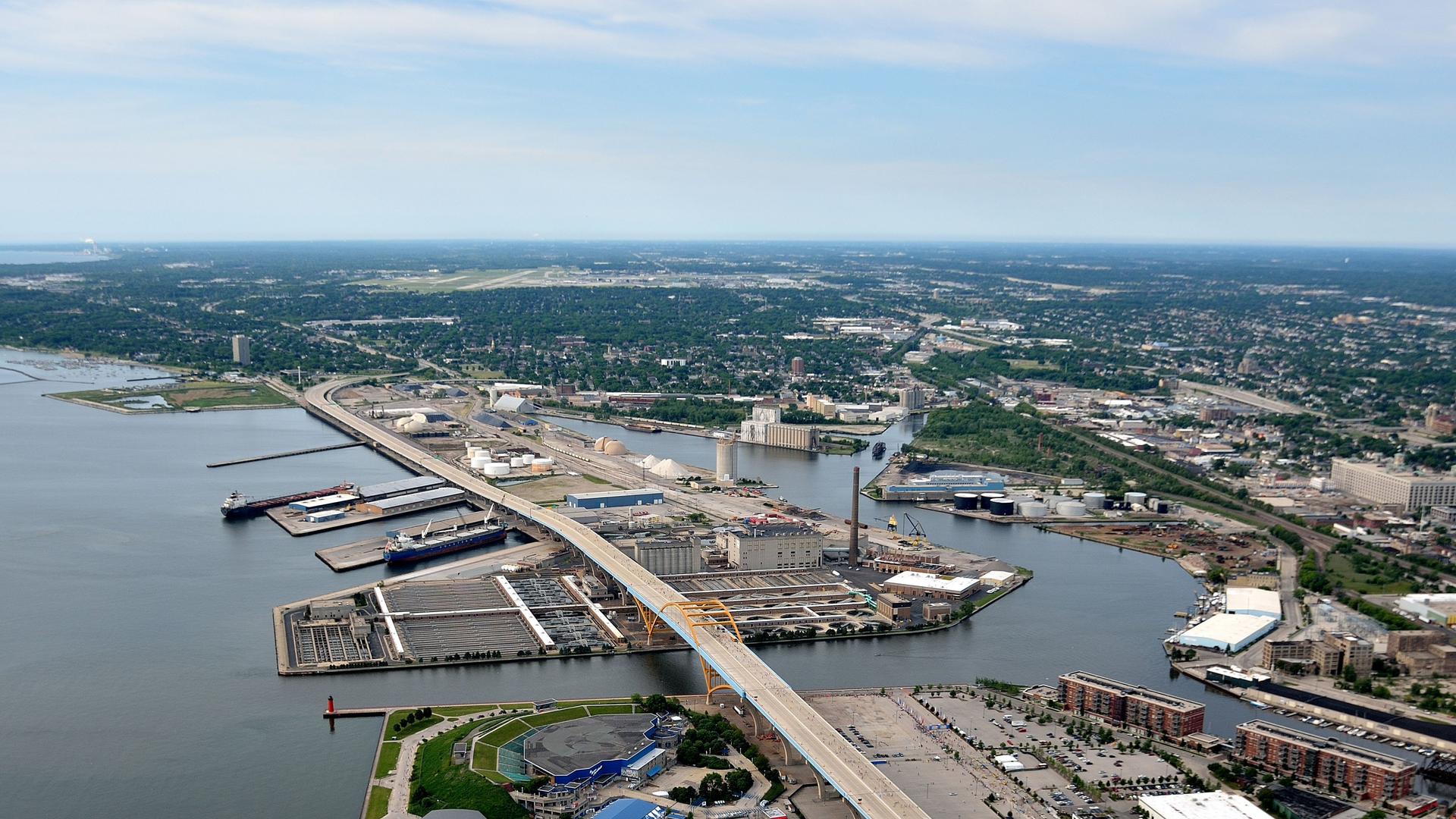
Ramboll case studies: Lessons from Port Milwaukee and the Port of Los Angeles
Port Milwaukee
Across the Great Lakes, Port Milwaukee offers a clear example of how climate resilience can drive strategic modernization. After a federally declared storm disaster in January 2020, the Port strategically confronted the realities of lake-level volatility, shoreline erosion, and aging waterfront structures. Ramboll supported the Port through an integrated capital asset renewal strategy, helping evaluate shoreline stabilization needs, prioritize infrastructure at risk, and shape a long-term capital plan aligned with municipal and state funding opportunities. By advancing shoreline protection, reinforcing critical assets, and planning for future conditions, Port Milwaukee has positioned itself to handle more vessels, strengthen its multimodal facilities, and attract new commercial tenants. Resilience planning at Port Milwaukee continues to be a platform for growth, competitiveness, and workforce stability.
Port of Los Angeles
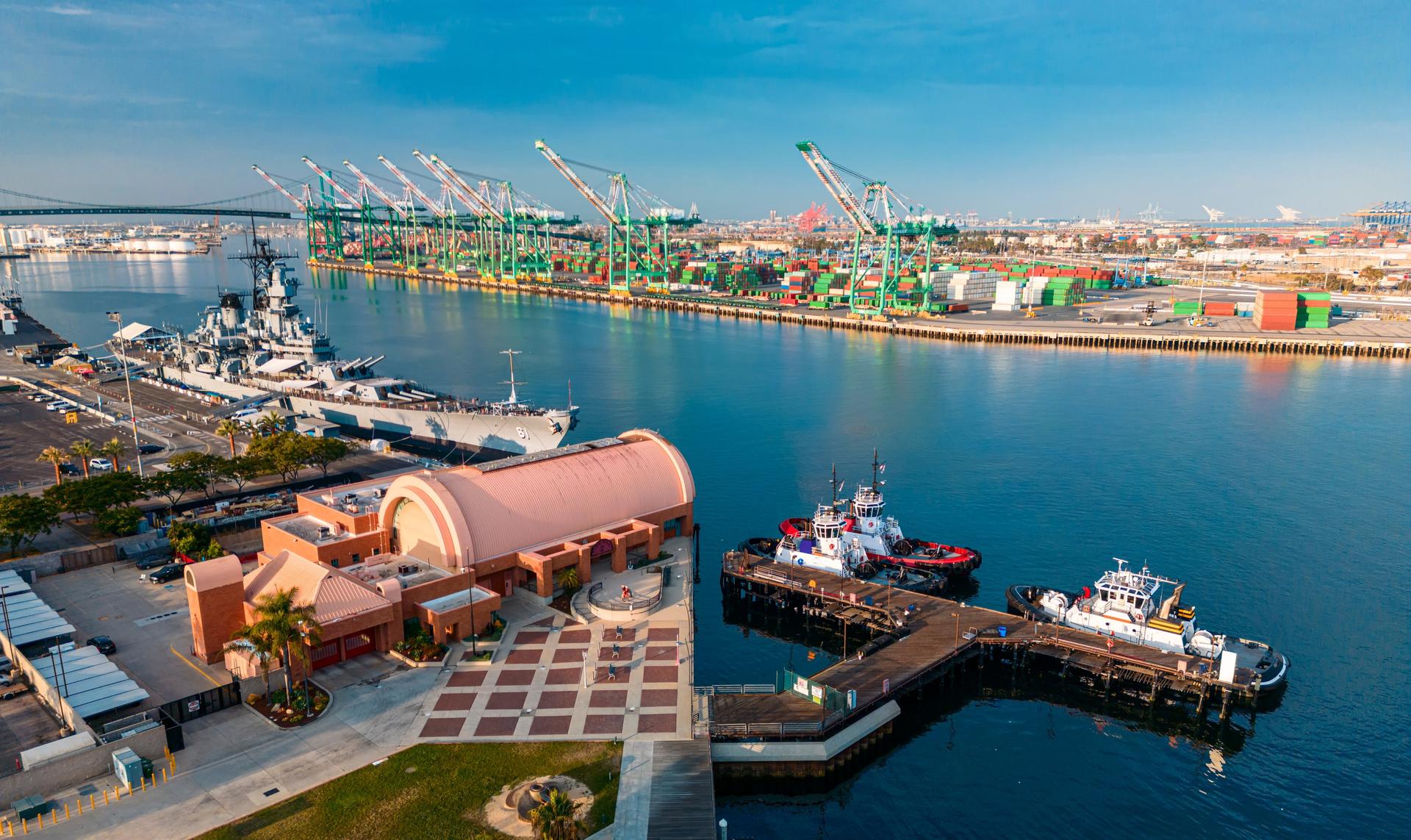
On the West Coast, the Port of Los Angeles, one of the nation’s busiest container gateways, has pursued emissions reduction as a catalyst for system-wide transformation. Ramboll has supported the Port’s ongoing climate and air-quality programs for 20 years, developing advanced greenhouse gas inventories, emissions modeling, and electrification strategies tailored to one of the most complex port environments in the world. These tools are enabling the Port of Los Angeles to meet regulatory requirements while planning for zero-emission cargo handling equipment, cleaner energy infrastructure, and climate-resilient terminal operations. Progress at the Port of Los Angeles’ underscores how environmental intelligence, when paired with long-range operational planning, can motivate modernization without sacrificing throughput, efficiency, or economic growth.
Taken together, the successes at Port Milwaukee and the Port of Los Angeles reveal a consistent trend: climate adaptation investments are unlocking modern economic activity, not restricting it.
A future maritime strategy rooted in resilience
US ports stand at a moment of historic possibility given the current policy focus on increased shipbuilding, domestic manufacturing expansion, and enhanced export capability. The federal funding remains available, economic demand is real, and climate risks are unavoidable. Waterfront resiliency has become a necessary industrial strategy.
Future success at US ports will come down to governance, foresight, and implementation. It's imperative that ports start to view resilience as a growth play and not a compliance obligation. Adapting to this shift means fostering US ports that are cleaner, stronger, more competitive, and more capable of delivering maritime-driven prosperity across the globe.
RELATED
USA
Supporting the Port of Los Angeles’ sustainability journey
For the last two decades, Ramboll has provided National Environmental Protection Act and California Environmental Quality Act impact and feasibility assessments for a broad range of low- and zero-emission port technologies at the Port of Los Angeles.
USA
Comprehensive capital asset renewal plan for Port Milwaukee
Ramboll integrated advanced monitoring, sustainability, and climate resiliency in the port’s capital asset renewal plan to help guide long-term infrastructure investment and operational growth.
Dec 16, 2025
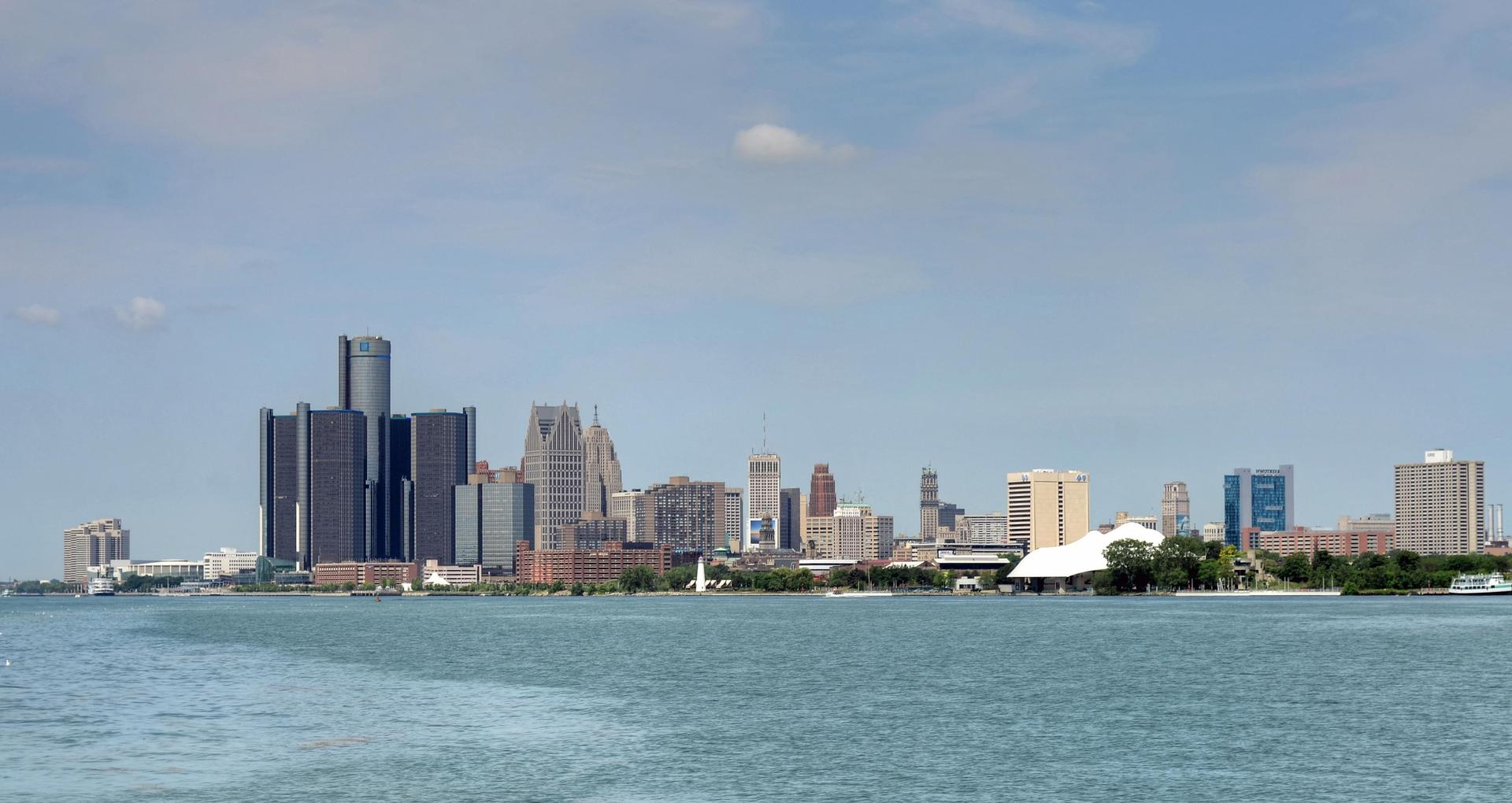
Ramboll selected by Port Detroit to lead feasibility study for Innovation Terminal
Ramboll has been awarded a contract to evaluate Port Detroit’s proposed Innovation Terminal, supporting Michigan’s goals to expand maritime trade, to strengthen US manufacturing and shipbuilding, to develop alternative fuels utilization, and to align with the forthcoming State of Michigan Maritime Strategy.