Innovative sediment remedy design for contaminated creek downstream of abandoned mine site
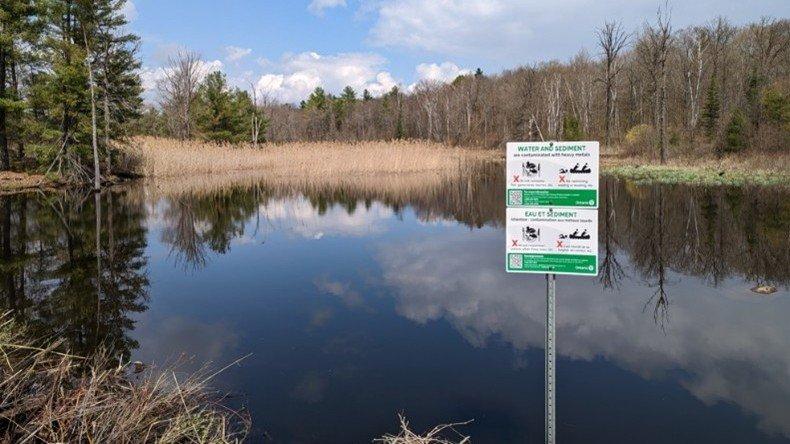
The Deloro Mine in eastern Ontario, Canada, opened in the late 1800s and operated for a century, producing gold, silver and other refined metals. Young’s Creek received runoff from a former tailings pond, such that metals and radionuclide contaminants were deposited in the creek and in adjacent wetland areas. Site sediments exhibited concentrations of arsenic, cobalt, copper, and nickel that represented ecological and human health exposure risks based on site-specific criteria. In addition, elevated radioactive material was present in isolated locations at the northern portion of the site. MECP has assumed responsibility for the site and has initiated several rehabilitation actions to reduce the environmental impact of releases from the Deloro site.
Prior to Ramboll’s involvement, a previous sediment remediation effort was suspended by MECP due to implementability concerns. Contaminated sediment had been removed, slurried, and pumped into large geotextile dewatering tubes intended to drain out the water. However, the tubes did not sufficiently drain, such that the material remained too wet and soft to meet the strength requirements needed to safely build and close the on-site disposal cell.
Ramboll was retained to complete a sediment remedy design for Young’s Creek that would address the unique challenges presented at the site. Using a human health and ecological risk-based approach, we refined the areas requiring sediment management based on preliminary remediation goals and background radionuclide levels. Our approach accounted for:
- Removal of shallow layers of sediment (about 15–30 cm) over a large area (about 22.4 hectares)
- Dredging and dewatering of highly contaminated and variable materials
- Water management to protect Young’s Creek and the downstream Moira River
- Geotechnical design modifications to the disposal cell for the selected sediment dewatering approach
Several pre-design field activities were conducted to support the remediation of Young’s Creek. First, bench top testing of creek sediments was performed to identify effective drying amendments and evaluate the appropriate doses needed for the sediment to dewater and attain sufficient strength upon full curing in the disposal cell. Second, a load test was performed to evaluate the geotechnical effects of placing extra load on the existing partially dewatered geotextile containers. Third, hydrodynamic monitoring was completed at two locations within the remediation site to better understand surface water flows requiring engineering controls. Finally, a pilot-scale solidification and stabilization study was implemented to demonstrate the proposed dewatering method could be effective at achieving the strength required for disposal cell stability.
Drawing on the results from the pre-design activities, we completed a remediation approach that addressed the site’s unique challenges and considered the implementability concerns of the previous actions. The updated strategy included water diversion to allow for equipment access and removal of sediments in relatively dry conditions, improving both excavation precision and minimizing the amount of moisture in dredged sediment. Further dewatering of the removed material is conducted through the addition of amendments, which also stabilize the sediment and provides the material strength needed for placement in the disposal cell. The plan also accounts for the limited space within the existing disposal cell by developing a performance-based approach to prioritizing the removal of the most highly contaminated sediment areas and developing an in situ capping option that MECP could implement to mitigate risks should areas of low concentration sediments be left in place.
Ramboll’s remedy design for Young’s Creek demonstrates an effective response to the complex challenges resulting from the legacy Deloro Mine contamination. By leveraging innovative sediment management techniques, intentional water diversion, and targeted removal of highly contaminated materials, we were able to help the client achieve meaningful progress in reducing environmental risks and protecting the Young’s Creek marsh systems. Our findings underscore the importance of comprehensive strategies in restoring affected landscapes and ensuring long-term environmental health.
LEARN MORE
Building resilience across the Great Lakes
For decades, Ramboll has partnered across the Great Lakes to solve some of the region's most complex environmental challenges. By integrating expertise in remediation, sediment management, biodiversity, climate adaptation, water systems, resilient infrastructure, and ports and maritime development, Ramboll helps governments, industry, and communities protect critical freshwater resources while enabling sustainable economic growth.